
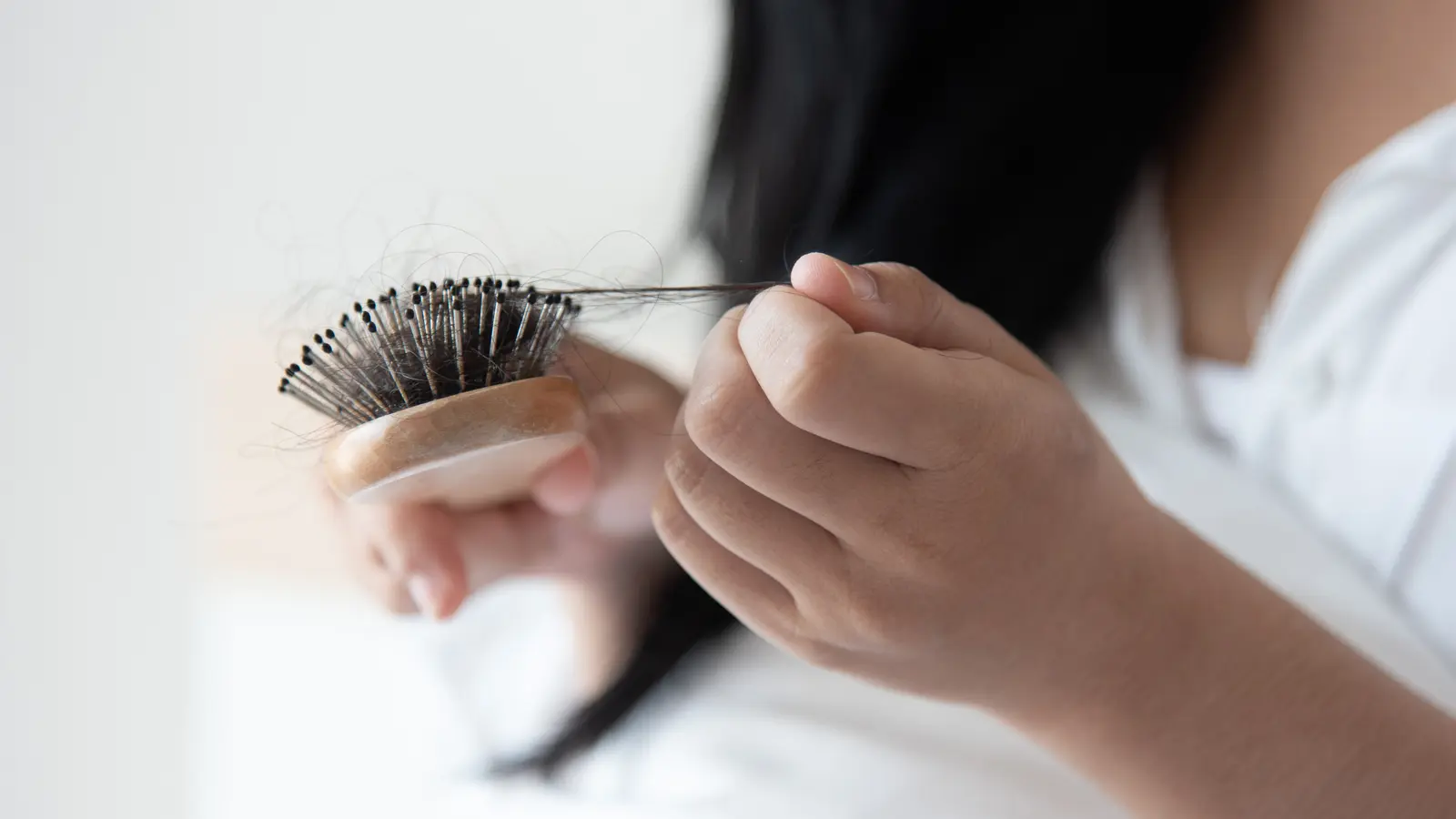
“It is seasonal” is not a diagnosis. A temporary diffuse shed can coincide with a change of season. Yet iron deficiency, thyroid disease, fever, childbirth, rapid weight loss, major stress, medication or the beginning of an alopecia can look remarkably similar in the mirror.
Is seasonal hair shedding real?
Hair follicles cycle through growth, transition and rest before hairs are released. Research in otherwise healthy women has found annual variation in the proportion of telogen hairs, with a summer peak that may be followed by more noticeable shedding. This makes a seasonal increase, particularly after summer, biologically plausible.
That population trend cannot prove that your shedding is seasonal. The calendar provides a clue; examination provides the diagnosis.
Shedding, breakage or progressive thinning?
Long strands on the pillow or in the shower suggest release from the root. Numerous short, irregular fragments are more consistent with breakage from heat, bleaching, chemical straightening, tight styles or extensions. A widening part, gradual loss of density or receding temples may indicate progressive alopecia.
The distinction matters: cosmetic care can improve a damaged fibre, but it cannot treat telogen effluvium, pattern hair loss and inflammatory scalp disease as if they were the same condition.
The trigger may come months before the shed
In telogen effluvium, more follicles enter the resting phase together. The increase in shedding often becomes visible two to three months after the trigger. A new shampoo may take the blame even though the relevant event was fever, surgery, childbirth, severe stress, restrictive eating or rapid weight loss weeks earlier.
Before an appointment, note when it began, how it changed, which areas are involved, scalp symptoms, medicines, dietary changes and recent health events. A monthly photograph of the parting in the same light is often more informative than counting every strand.
What may a clinician investigate?
History and scalp examination guide the assessment. Depending on the context, the diagnosis may involve telogen effluvium, pattern hair loss, alopecia areata, repeated traction, scalp disease or a medicine-related effect. Targeted blood tests may be appropriate when iron deficiency, thyroid dysfunction or another clinical cause is suspected.
Assessment does not mean the same automatic panel of tests for everyone. It should respond to symptoms, history and examination. Never stop prescribed medication because you suspect it; speak to the clinician responsible for your care.
When should you seek advice rather than wait for another season?
- distinct bald patches appear, or eyebrows and eyelashes are affected;
- the scalp is painful, red, very itchy, scaly or pustular;
- the parting widens or density declines progressively;
- shedding is sudden, very heavy or lasts for several months;
- it accompanies unexplained tiredness, weight loss, menstrual change or other symptoms;
- it occurs in a child, during illness or after a new medicine.
Anti-hair-loss shampoos: helpful, within limits
A suitable shampoo can cleanse gently, improve scalp comfort and make hair appear fuller. Those are worthwhile benefits. However, it remains on the scalp briefly and cannot by itself correct a deficiency, hormonal disorder or alopecia.
A luxury label, a high price or a dramatic social-media demonstration does not establish effectiveness. Choose care according to scalp condition and professional guidance, not the staging around the bottle.
Supplements are not a “just in case” purchase
Iron, zinc, vitamin D and other nutrients matter when diet or investigations reveal a relevant problem. Taking them blindly is not neutral: an unsuitable dose may be useless, cause harm or delay the right diagnosis. As our guide to high-dose vitamin D explains, one supplement routine cannot suit everyone. High-dose biotin can also interfere with some laboratory tests and should be disclosed before blood testing.
A varied diet with adequate protein supports hair health. Restrictive diets and rapid weight loss may instead trigger telogen effluvium; our article on weight plateaus despite sustained efforts explains why the body should not be punished to imitate an online routine. A supplement addresses a defined need; it does not replace diagnosis.
What can you do while the cycle recovers?
- handle and detangle hair gently;
- limit very tight hairstyles, extensions and harsh chemical processing;
- avoid restrictive dieting and maintain adequate protein intake;
- treat scalp disease when it has been diagnosed;
- track change with comparable photographs instead of anxious daily inspection.
When acute telogen effluvium is confirmed and its trigger has resolved, shedding can gradually settle. Regrowth takes time: hair biology does not follow the pace of a fifteen-second advertisement.
What about mesotherapy, PRP or hair transplantation?
Treatment depends on the diagnosis. Scalp mesotherapy, autologous protocols such as PRP and other medical options may be discussed for selected indications, but they are not interchangeable or universal answers. Product or preparation, evidence, contraindications and realistic aims should be explained. RJMed covers these options in its guide to hair-loss treatments in Tunisia.
A hair transplant in Tunisia redistributes follicles for selected indications. It does not treat temporary diffuse shedding or an active, unstabilised cause. Diagnosis still comes first.
Frequently asked questions
Is shedding in September or autumn always normal?
No. Season can contribute to variation, but duration, pattern, progression and personal context matter more than the month.
Should I immediately change shampoo?
Not necessarily. Stop and seek advice if it irritates your scalp. Otherwise, changing bottles cannot address an internal cause or progressive alopecia.
Does cutting hair stop shedding?
A haircut can improve the appearance of volume and damaged ends, but it does not change the follicle cycle beneath the skin.
When is waiting a poor strategy?
When shedding intensifies, continues for months, creates visible thinning or comes with scalp or general-health symptoms. Early assessment prevents months of poorly targeted purchases.
The RJMed position
We are not against shampoos, treatments or supplements. We challenge the order of priorities when marketing comes before health. Your hair does not need the most photographed product; it needs someone to understand why it is falling.