
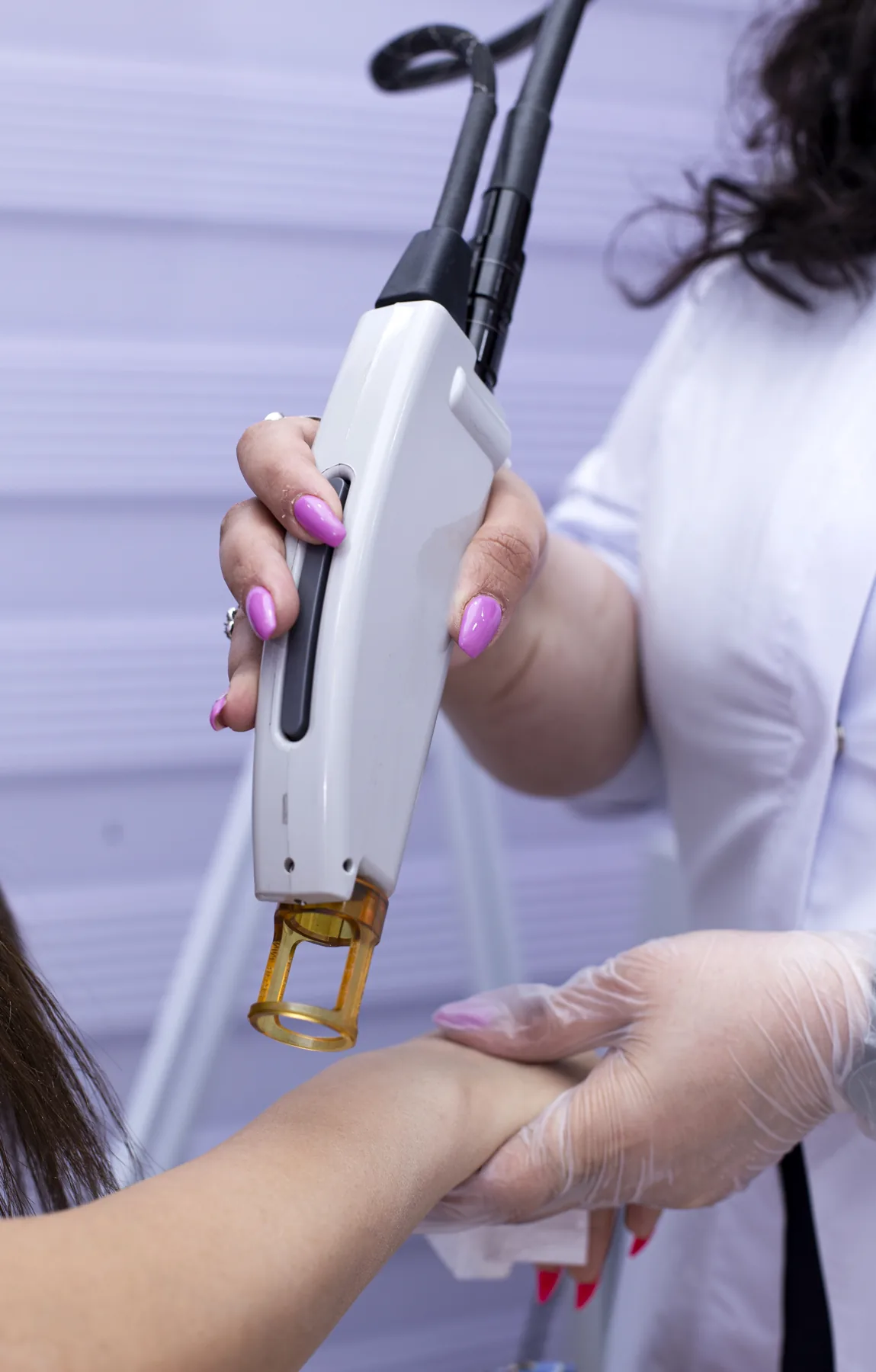
“Permanent hair removal” sounds reassuring, yet it promises more than medicine can guarantee. Laser treatment can deliver a substantial, long-lasting reduction in hair growth. It cannot promise every patient a completely hair-free result for life.
Is laser hair removal really permanent?
Laser energy is absorbed by melanin in the hair and converted into heat, which damages the follicle’s ability to produce another hair. Not every follicle is equally vulnerable at the same time: treatment works best while hairs are in an active growth phase.
This is why careful clinicians and research papers refer to long-term hair reduction. Following an effective course, any remaining or returning hair may be sparser, finer and lighter, but the degree of reduction differs between individuals and body areas.
Why are several sessions needed?
Only a proportion of hairs are in the ideal phase on any given day. Sessions are spaced so that other follicles can be targeted as they become active. Timing depends on the treated area, growth cycle and observed response; a good protocol is adjusted rather than copied from one patient to another.
Occasional maintenance may be advised later. This does not automatically mean that the initial treatment failed: hormones, age and new follicular activity can all influence future growth.
Why can hair grow back?
Some regrowth may occur over time. Pregnancy, menopause, certain medicines and hormonal conditions can activate follicles that were previously inconspicuous. Rapidly increasing facial hair, particularly with irregular periods or other symptoms, deserves medical assessment before repeatedly treating the visible hair.
Laser does not correct an underlying hormonal cause. In these situations, medical assessment and aesthetic treatment have different, complementary roles.
Which hair responds best?
Dark, melanin-rich hair generally provides the clearest target. White and grey hair contains little or no useful pigment, while very light blond and red hair often responds poorly. A trustworthy consultation should acknowledge a weak indication instead of selling an unrealistic package.
Darker skin tones: settings matter as much as the device
Many skin tones can be treated, but wavelength, fluence, pulse duration and cooling must suit the individual. With darker or recently tanned skin, unsuitable parameters increase the risk of burns and unwanted pigment changes.
A machine’s brand name alone is not enough. Ask about the operator’s experience with your skin tone, the initial assessment and the plan should your skin react unexpectedly.
Laser and IPL are not identical
A laser delivers a selected wavelength, whereas intense pulsed light emits a broader filtered spectrum. Both may reduce hair growth, but outcomes and safety depend on the equipment, settings, skin tone and the person operating it. “Laser” should not be used as a catch-all label for every light-based device.
Questions worth asking before treatment
- Which device will be used, and why does it suit my skin and hair?
- Would a patch test be appropriate?
- Which medicines, photosensitising products or medical history should I disclose?
- What range of sessions is realistic without promising a fixed result?
- What should I do between visits, and whom should I contact after a reaction?
Waxing and tweezing are generally avoided during a course because they remove the laser’s target. Shaving is usually permitted according to the clinic’s instructions. Purpose-made eye protection is essential during laser exposure.
Tunisian sunshine changes the treatment calendar
In Tunisia, meaningful sun exposure is not limited to summer holidays. Tanned or recently exposed skin contains more surface melanin and may react differently. Follow the practitioner’s timing, avoid tanning and protect the treated area carefully. Facial and other exposed-area sessions should fit your real lifestyle, not simply the season printed on a calendar.
After a session: expected reaction or warning sign?
Mild redness, warmth and follicular swelling can occur and should settle progressively. Use soothing care and sun protection as instructed. Significant pain, blistering, pronounced crusting or a persistent change in skin colour warrants prompt contact with the treating professional or a doctor.
A better goal: meaningful reduction without miracle claims
Success means sustained reduction, less frequent regrowth and safe treatment. The number of sessions and possible maintenance should be framed as adjustable estimates. RJMed’s position is simple: realistic information protects patients better than an absolute slogan.
Frequently asked questions
Is laser hair removal permanent?
It can provide substantial, long-term reduction, but no method can guarantee that every hair will disappear for the rest of a person’s life.
How many sessions will I need?
A course of several sessions is usual, but the number and spacing depend on the area, hair, skin tone, hormonal context and individual response.
Can darker skin be treated?
Often yes, when suitable technology and settings are used by an experienced operator. Recently tanned skin requires particular caution.