Wrinkles and facial expressions
Wrinkles that appear with movement, lines visible at rest and shadows caused by volume changes must be distinguished, as they are not managed in the same way.
Information and guidance on cosmetic surgery and aesthetic medicine in Tunisia

Wrinkles, volume loss, dark circles, lips, skin texture and pigmentation may have different causes and do not automatically require the same treatment. This guide helps you compare the available options, their limitations and the questions to ask during a consultation.
Facial aesthetic medicine in Tunisia includes non-surgical procedures intended to address selected skin concerns, facial volume changes and facial balance. Treatment may involve injectables, energy-based devices, skin-stimulation techniques or medically supervised dermatological care.
The most appropriate treatment cannot be selected from a photograph or the name of an area alone. A wrinkle may be linked to facial movement, loss of structural support, dehydration or skin quality. Under-eye concerns may involve hollowness, pigmentation, visible vessels or bags. A consultation helps identify the cause before discussing a procedure.

This initial overview helps avoid choosing a technique before identifying what is causing the appearance.
Wrinkles that appear with movement, lines visible at rest and shadows caused by volume changes must be distinguished, as they are not managed in the same way.
Dry, uncomfortable or dull-looking skin does not necessarily need added volume. Assessment considers the skin barrier, daily habits and suitable skincare.
Volume loss or redistribution can affect the temples, cheeks, facial folds and jawline. Any correction should respect anatomy and facial proportions.
Hollowness, pigmentation, thin translucent skin and bags may occur together. Because the area is close to the eye, careful patient selection and an appropriate technique are essential.
Hydration, definition, asymmetry and volume are different goals. Treatment planning should consider lip movement, the facial profile and overall proportions.
Pores, marks, dark spots and uneven texture require an assessment of skin type, sun exposure and any underlying dermatological condition.
Each treatment category works differently. The detailed pages explain individual techniques without confusing their indications with those of another treatment.

Hyaluronic acid injections in Tunisia may be considered for selected hollows, volume changes or facial contours. Product choice, quantity and injection depth depend on anatomy. Injectable treatment is a medical procedure: product origin, traceability, expected effects and possible complications should be clearly explained.
Learn about hyaluronic acid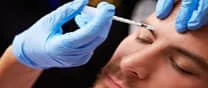
When wrinkles are mainly caused by muscle activity, a doctor may discuss a treatment intended to temporarily reduce that activity. The desired result, treatment areas, asymmetries and risks require medical assessment.
View aesthetic medicine treatments
These protocols focus more on hydration and selected skin characteristics than on creating projected volume. The number of sessions, maintenance plan and difference from conventional dermal filling should be explained.
Compare hyaluronic acid treatments
Microneedling may be considered for selected texture concerns. Needle depth, hygiene, associated products and skin type all affect safety. Active lesions or certain dermatological conditions may require postponing or avoiding treatment.

A chemical peel produces controlled exfoliation, with intensity depending on the product and protocol. It may be considered for selected irregularities but requires careful patient selection, particularly for darker skin tones or when there is a risk of pigmentation changes.

Under-eye treatment in Tunisia depends on the main cause: hollowness, pigmentation, visible vessels, thin skin or bags. Volume correction is not suitable for every under-eye concern, and the periocular area requires particular caution.

Treatment may focus on hydration, definition, asymmetry or volume. The doctor assesses proportions, the smile, medical history and the risk of reactions. A natural-looking result depends not only on quantity, but also on the indication and technique.

In selected cases, non-surgical rhinoplasty in Tunisia may use dermal filler to alter the visual appearance of certain angles or irregularities. It adds volume and cannot make the nose smaller. The area carries specific vascular risks, so suitability and surgical alternatives should be discussed.

The appearance beneath the chin may be influenced by skin, fat, muscle, chin projection or posture. No device or injectable suits every cause. Assessment determines whether a non-surgical option is appropriate or limited.
| Concern | Possible approach | Key limitation |
|---|---|---|
| Expression lines | Assessment of muscle movement and an appropriate medical treatment | Does not work like a volumising filler |
| Hollowness or loss of support | Conservative filler treatment in selected cases | An injection cannot tighten substantial excess skin |
| Dehydrated or dull skin | Skincare, skin boosters or a skin protocol based on assessment | Radiance and volume are different goals |
| Dark spots or uneven texture | Chemical peel, device-based treatment or suitable dermatological care | Skin type and diagnosis determine the choice |
| Under-eye concern | Approach determined by the main underlying cause | Not every under-eye concern should be injected |
| Significant skin laxity | Comparison with facial surgery | A non-surgical treatment cannot reproduce a facelift |
Facial consultation with an aesthetic doctor in Tunisia is not simply about selecting a product. It confirms whether the concern is appropriate for aesthetic medicine, examines the face at rest and in motion, looks for possible skin conditions and reviews medical history.
The practitioner should be informed of allergies, current medication, autoimmune disease, infections and previous injections or procedures. For an injectable product, ask about its name, origin, expected duration, traceability and the plan in the event of a complication.
The nose, glabella and some periocular areas have complex vascular anatomy. This does not mean every procedure causes a complication, but appropriate indications, anatomical knowledge, technique and the ability to recognise a problem quickly are essential.
An infection, active inflammation, dermatological flare, wound or certain treatments may justify postponement. A recent or unexplained facial change should first receive medical assessment. A practitioner may also advise against a procedure when it does not address the concern or when the likely benefit does not justify the risk.
Explain the main concern without selecting a product or quantity yourself.
The consultation assesses the skin, facial volume, expressions and medical history.
The technique, limitations, product, sessions, price and follow-up should be clearly detailed.
You may postpone, decline or seek another opinion before any procedure.
Under-eye cost of facial aesthetic medicine in Tunisia varies according to the technique, product or device, treatment area, clinical time, number of sessions and follow-up. “Facial injections” are not a standard unit: two quotations may involve very different goals, quantities or products.
When comparing quotations, check what is actually included: consultation, product name and quantity, consumables, treatment session, review and any possible touch-up. For a skin protocol, ask about the proposed number of sessions and maintenance frequency. A package should never lead to an unnecessary procedure or unjustified quantity.
Practitioner qualifications, product traceability and access to follow-up are part of the value of care. A remote estimate may provide guidance, but the final quotation depends on examination and the confirmed indication.
For further information on injection safety, consult the guidance from the French National Agency for Medicines and Health Products Safety.
Simply describe your concern. RJMed helps you identify useful information before a consultation.
The choice depends on the cause of the concern, facial anatomy, skin condition and medical history. A consultation avoids automatically matching an area with a specific product.
No. They do not act on the same structures or produce the same degree of change. An injectable or device cannot reproduce a facelift or eyelid surgery.
Most aesthetic medicine procedures have temporary or progressive effects. Duration varies according to the technique, product, area and individual response.
A combination may sometimes be considered, but each treatment should address a clearly identified indication. The timing and purpose of every stage should be explained.
A balanced result depends on an appropriate indication, realistic goals, sound technique and a suitable quantity. No precise result can be guaranteed.
Compare practitioner qualifications, the product or device, quantity, areas, sessions and follow-up. A price alone cannot be used to assess two protocols.
RJMed provides information and helps users submit an enquiry. Diagnosis, treatment indication and performance of the procedure remain the responsibility of the relevant healthcare professional.
Before comparing procedures, verify the professionals, facility, quotation, package and medical-stay pathway.