Stabilized surgery
The wounds must be closed and the edema absorbed. A planned surgical revision generally leads to postponing the tattoo.
Information and guidance in surgery and aesthetic medicine in Tunisia

After breast surgery, some people want to find a visual reference that resembles them. Drawing, color, light and shadow allow you to recreate an areola or the illusion of a nipple, with a progressive approach where each choice belongs to the patient.
The dermopigmentation of the areolas in Tunisia introduces pigments into the superficial dermis in order to reconstruct shape and color. It can occur after mastectomy and reconstruction, after conservative surgery, breast reduction, facelift, scar complication or partial loss of pigmentation.
On a nipple-free reconstruction, the 3D drawing uses gradients, shadows and points of light to create an illusion of projection. The surface remains flat: the “relief” is visual. If physical volume is desired, surgical nipple reconstruction or a removable prosthesis may be discussed.
When the other breast is present, it serves as a reference without having to be copied to the millimeter. After bilateral reconstruction, the two areolas can be designed together. Mild asymmetry is part of natural anatomy; the goal is credible consistency, not geometric perfection.
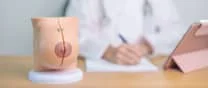
For some patients, this step visually closes a long period of care. For others, it is not necessary. There is no universally good way to inhabit a reconstructed body: the project can be desired immediately, matured for a long time, modified or abandoned.
A respectful consultation allows time to look at the drawing, ask for a change, and say no. Optimism does not consist of erasing the ordeal experienced, but of making possible a new, calm and fully personal choice.
The timeline follows actual healing and treatments, not a commercial date.
The wounds must be closed and the edema absorbed. A planned surgical revision generally leads to postponing the tattoo.
Irradiated skin may be thinner, dry, fibrous or fragile. Team agreement and an individualized deadline are essential.
Relief, adhesion, color, vascularization and sensitivity influence the setting of the pigment and the number of possible passes.
Unexplained redness, discharge, wound, infection, dermatological outbreak or recent pain must be examined before any action.
Dermopigmentation does not interrupt monitoring or treatment. A new lesion or skin change must first be evaluated medically.
The drawing is validated without pressure. A person may request more time even if the skin is technically ready.
The project begins standing up, in neutral light. The professional observes the height, the axis of the breast, the desired diameter, the color of the skin and, when it exists, the opposite areola. A temporary template allows you to look at everything from a distance before pigmenting.
An areola shade is almost never a uniform solid color. It combines several warm, cold, light or brown shades. The edge can be diffuse, the center denser and some irregular details make the drawing less artificial. On dark to dark skin, the inflammatory development and contrast must be anticipated without automatically lightening or darkening.
The technique places a shadow under a drawn nipple and a reflection on the opposite part. Seen from the front, this combination gives the impression of volume. The effect depends on the angle, light and design; it modifies neither the real projection nor the sensitivity.
History, treatments, scar, allergies, skin, sensitivity and expectations are gathered before any proposal.
Position, circle, edge, shadow and colors are tested on the surface then validated in front of the mirror.
A sterile cartridge gradually introduces the shades, with careful passes over the scar tissue.
After complete healing, color, symmetry and less pigmented areas are examined before a touch-up.
Immediately afterwards, the area often appears darker and warmer than expected. Redness, slight swelling, tenderness, or a little oozing may occur. A thin film sometimes forms; Pulling it out can remove pigment and encourage scarring.
The written instructions specify cleaning, protection, authorized product, clothing, shower, swimming, sport, sun and warning signs. Bra friction, bathing or non-recommended treatment can disrupt skin that is still open. The area should not be made up to hide the initial phase.
When the epidermis renews itself, the color softens. Scarred skin can retain pigment unevenly; a retouch is therefore not necessarily a failure. It is planned after stabilization, never on an area that is still inflamed.
The pigment can remain for several years but it evolves. Sun, skin renewal, scar, immune system and color used influence its appearance. Future correction must respect the history of the pigments: overlaying a color at random can create a gray, orange or too dark tone that is difficult to remove.
Medical tattooing crosses the skin barrier. The work surface, hands, skin preparation and equipment therefore follow an aseptic procedure. The cartridge is sterile, single-use and opened in front of the person. The cups and applied products must not be recontaminated.
The reference, manufacturer, color and batch of each pigment are recorded. This traceability helps in the event of a reaction or recall. “Natural pigment” or “hypoallergenic” does not mean zero risk: infection, persistent allergy, granuloma, hypertrophic scar, color change and poor setting remain possible.
A tendency to keloids, anticoagulant or immunosuppressive treatment, unbalanced diabetes, a known allergy, a skin disease, pregnancy or an unstable medical condition require appropriate advice. A spreading reaction, increasing heat, pus, fever or unusual pain requires consultation.
| Options | What she brings | What it implies | To understand |
|---|---|---|---|
| 3D dermopigmentation | Color and optical illusion of relief | Skin procedure, healing and possible touch-ups | The surface remains flat |
| Surgical reconstruction | Physical relief of the nipple according to technique | Intervention, scar and risk of flattening | Pigmentation can complete the result |
| Adhesive prosthesis | Relief and color without permanent gesture | Installation, maintenance and replacement | It can be withdrawn at any time |
| Do not add anything | No action or maintenance | Decision sometimes immediate, sometimes evolving | It is a complete and legitimate option |
The price of a 3D medical areola tattoo in Tunisia depends on unilateral or bilateral treatment, drawing time, complexity of scars, number of shades and touch-ups included. Recreating two coordinating areolas is more than just doubling a small pattern.
The quote must separate consultation, initial session, control and possible retouching. It also specifies the pigments and consumables, the treatments provided and the planned course of action if the color heals unevenly.
A price should never push you to decide too soon after a medical event. The possibility of leaving with the proposed drawing, of thinking and postponing the session is part of a professional approach.
RJMed presents dermopigmentation as a restorative option within a broader pathway. The goal is not to declare a reconstruction “incomplete,” but to help each person understand the design, safety, limitations, and alternatives before choosing.
You can describe your journey, the surgery performed, the healing and what you would like to see visually.
Before comparing procedures, verify the professionals, facility, quotation, package and medical-stay pathway.